


In September 2025, France sounded the alarm regarding how France’s new Markets in Crypto-Assets (MiCA) regulation is being applied across the European Union. The Autorité des Marchés Financiers (AMF), in concert with the assistance of Italy’s Consob and Austria’s FMA, issued a warning that some crypto firms authorized in particular member states are exploiting forbearance of regulation, and then “passporting” into stronger-regulated jurisdictions such as France. Some of this impetus, French authorities could close down such firms or refuse passport recognition if MiCA implementation were harmonized and supervision possibly centralized under ESMA. This is likely to reshape the regulatory space for crypto within the EU significantly.
1. What is License Passporting & Why It Matters Under MiCA
- Passporting under license is how a licensed crypto-asset service provider (CASP) in one EU member state can rely on such a license to operate within the union. MiCA (fully operational since December 2024) put this in codified form for crypto businesses.
- Ideally, this encourages single-market efficiency: businesses may grow without needing additional licenses in each country. But it relies on consistency in enforcement and regulation among countries. Inconsistencies risk “regulation shopping,” where businesses choose states with less rigorous review.
2. What France, Italy & Austria are Asking
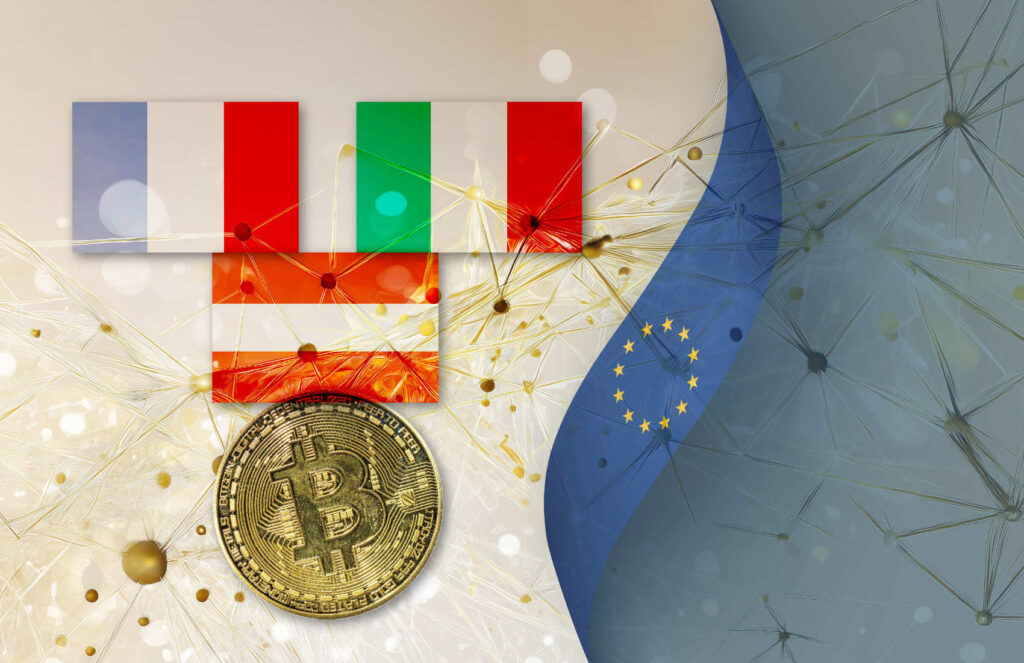
- They assert that existing licensing imbalances have led to disproportionate risk exposure. They call for direct ESMA oversight of significant CASPs so that significant crypto entities aren’t regulated by the whims of individual member states alone.
- They call for tighter cybersecurity regulation, tighter controls on crypto operations outside the EU, and token offering regulation reforms under MiCA.
3. Risks & Implications of Blocking Passporting
- Legally complex: withholding recognition of EU-issued licenses risks violating EU single-market regulations. France calls blocking a type of “atomic weapon” — a last resort.
- Impact on crypto businesses: Companies licensed in more permissive jurisdictions (e.g., Malta or Luxembourg) might be prevented from entering tighter markets. That could change where crypto exchanges, wallets, and other providers choose to connect.
- Regulatory uncertainty: Where multiple member states deny passports or vary standards, it may affect investor confidence, cross-border business models of crypto, and the speed of crypto innovation in Europe.
4. ESMA’s Role: Centralized Oversight?
- The European Securities and Markets Authority (ESMA) has been requested by France, Italy, Austria to acquire more power to regulate the big CASPs. The belief is that ESMA can enforce uniform standards and track cross-border risks.
- Member states resist relinquishing control, valuing national sovereignty as opposed to financial regulation. The battle between national vs EU-wide control is likely to be a main theme.
5. What This Might Portend for Crypto Firms & Markets in 2025-2026
| Area | Possible Outcome |
| Licensing Practice | Companies may avoid states that are deemed “lenient” at the risk of being boycotted; licensing needs can be toughened. |
| Investment Flows | Innovators may prefer exchanges / services with good, transparent regulation. Poor enforcement nations may suffer from capital flight. |
| Compliance Costs | Firms may see greater compliance/documentation, especially around cybersecurity, token offerings, and external activities. |
| Regulatory Reforms | MiCA might be revised, especially requirements on supervision, passporting derogations, and ESMA’s remit. |
| Market Access | Firms may face dual licensing or raise standards to access more restrictive markets like France. |
6. Challenges to France’s Position
- EU single market cohesion damage: Blocking license recognition may feed fragmentation.
- Legal obstacles: MiCA was designed around passporting; alteration or restriction would require legal changes or court action.
- Other nations’ resistance: Some member states equate independence of licensing; may see France’s stance as encroachment.
- Enforcement logistics: It is hard to get all member states to implement MiCA uniformly; resourcing, capacity, and court systems are disparate.